Zara Self-Checkout System Unofficial Redesign
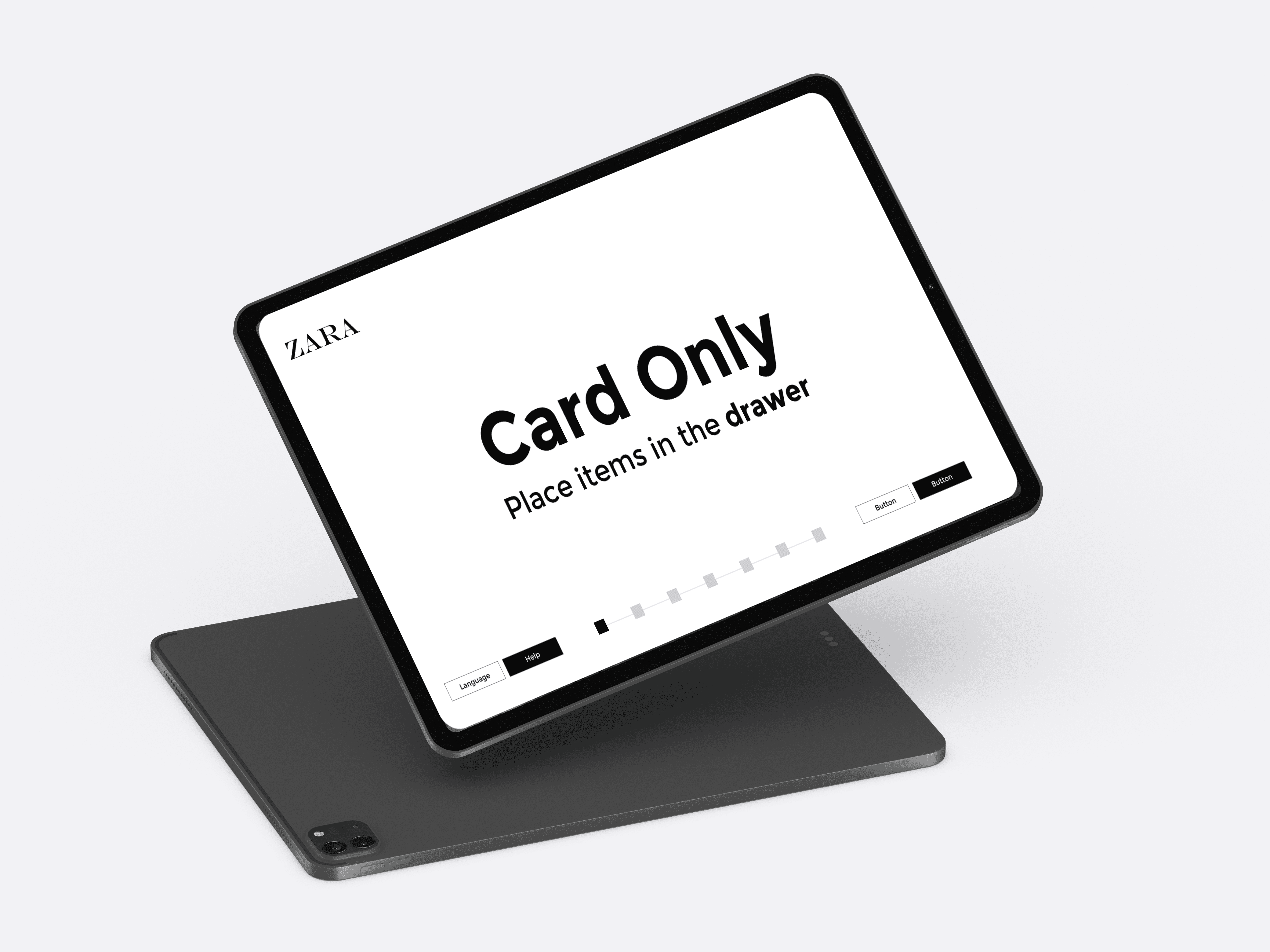
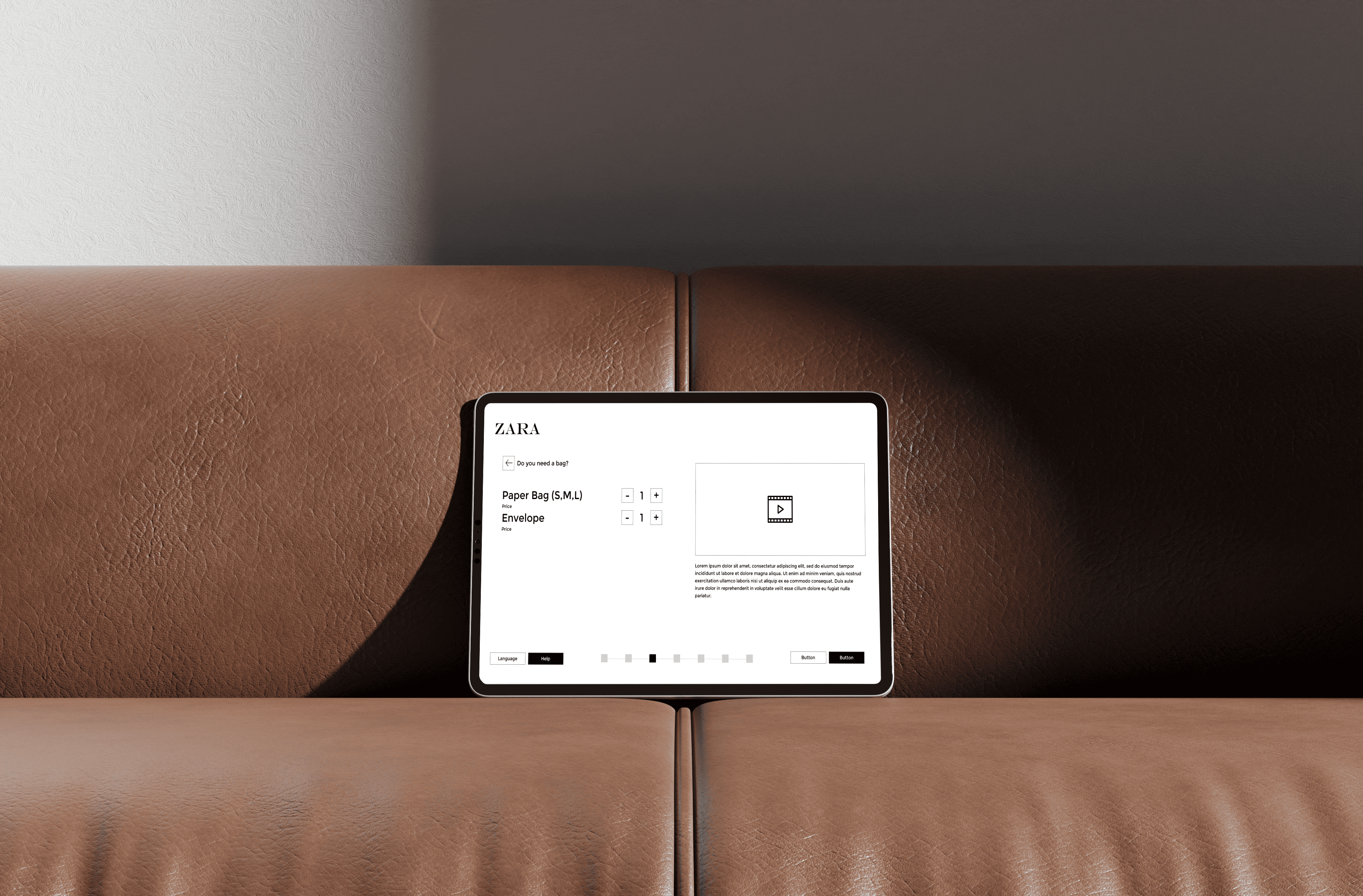
An interface concept rethinking how customers interact with self-checkout systems. The project explores cognitive load, task flow, and micro-interaction design to create a smoother retail experience.
2024
UX Concept / Interaction Design

The Zara Self-Checkout Redesign project focused on improving efficiency while preserving the brand’s signature minimalism within the in-store digital experience. The original flow was functional but lacked the visual harmony and intuitive guidance that define Zara’s retail identity. My objective was to create a faster, more intuitive process that blended usability with the brand’s refined aesthetic.
To achieve this, I conducted a full user journey analysis, competitive benchmarking, and usability testing sessions to identify major friction points such as unclear payment feedback, redundant steps, and inconsistent interface elements. These insights guided the redesign toward a cleaner, goal-oriented flow that supports both operational speed and an elegant, fashion-forward user experience.
Key Outcomes
Simplified the flow into three clear stages, reducing cognitive load and checkout time.
Improved task completion efficiency and user satisfaction in testing sessions.
Ensured design consistency with Zara’s premium aesthetic through refined typography, contrast, and motion.
Skills & Focus Areas
Service design and user-centred iteration.
Usability testing and data-driven improvement.
Aligning digital interaction with brand identity and emotional experience.
The Zara Self-Checkout Redesign project focused on improving efficiency while preserving the brand’s signature minimalism within the in-store digital experience. The original flow was functional but lacked the visual harmony and intuitive guidance that define Zara’s retail identity. My objective was to create a faster, more intuitive process that blended usability with the brand’s refined aesthetic.
To achieve this, I conducted a full user journey analysis, competitive benchmarking, and usability testing sessions to identify major friction points such as unclear payment feedback, redundant steps, and inconsistent interface elements. These insights guided the redesign toward a cleaner, goal-oriented flow that supports both operational speed and an elegant, fashion-forward user experience.
Key Outcomes
Simplified the flow into three clear stages, reducing cognitive load and checkout time.
Improved task completion efficiency and user satisfaction in testing sessions.
Ensured design consistency with Zara’s premium aesthetic through refined typography, contrast, and motion.
Skills & Focus Areas
Service design and user-centred iteration.
Usability testing and data-driven improvement.
Aligning digital interaction with brand identity and emotional experience.